AI Filmmaking Will Cascade Hollywood: Why Everyone Can Now Tell Their Story
The skeptics focus on what AI can't do. They're missing the revolution happening right now: AI-generated short films that are genuinely incredible, and tools that are putting cinema-quality production in the hands of billions.
Watch the original commentary above—then read our counter-perspective below.
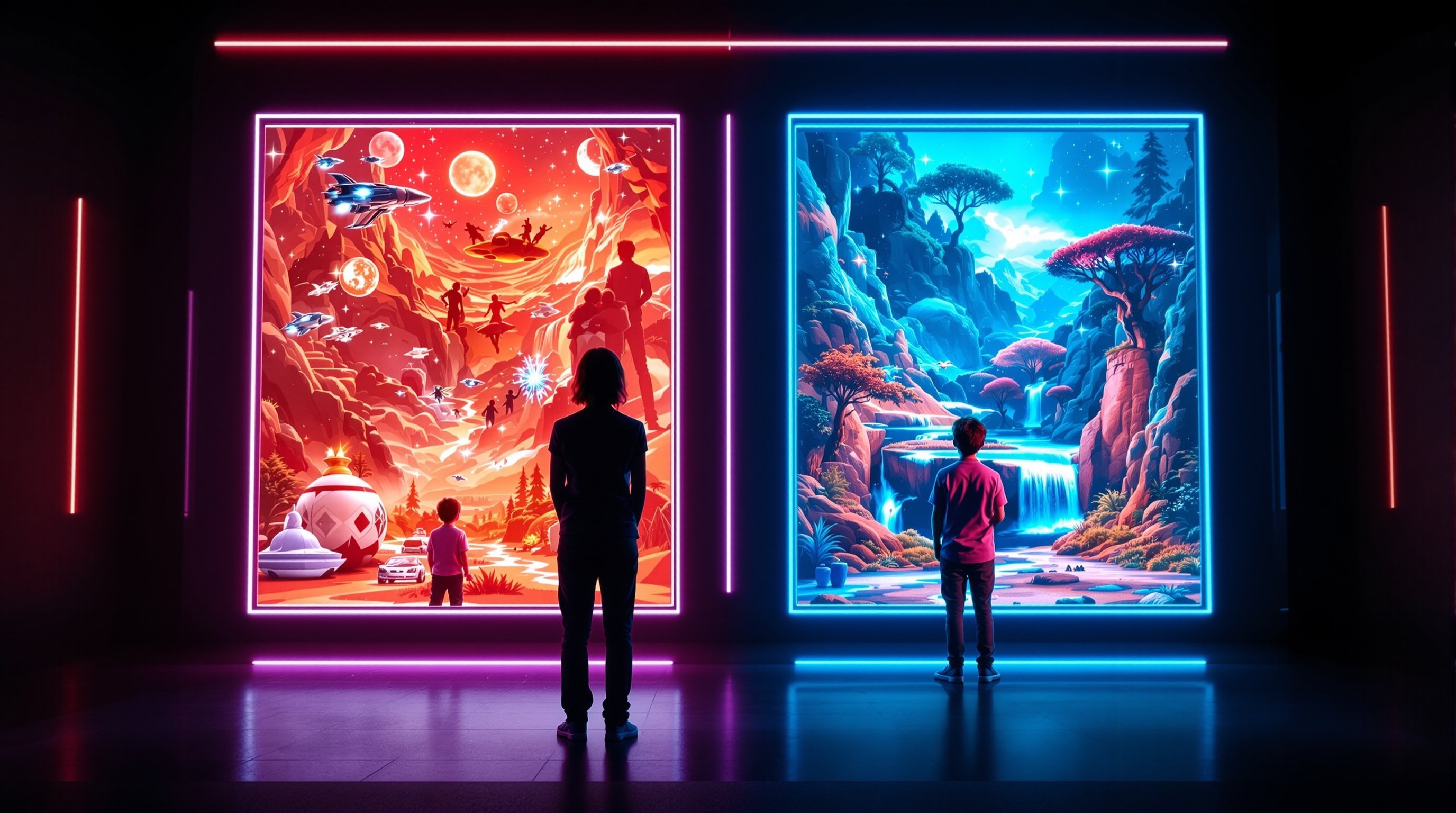
The Skeptic's Blind Spot
There's a common criticism of AI filmmaking that goes something like this: "AI can generate images, but it can't tell stories. Real filmmaking requires human creativity, emotional depth, and years of craft."
This argument sounds reasonable—until you actually watch what's being created. I've seen AI-generated short films that moved me. Films with compelling characters, emotional arcs, and visual storytelling that rivals indie productions with 10x the budget. The skeptics are looking at early prototypes and declaring the revolution over before it's begun.
The Reality Check
Here's what the skeptics miss: storytelling isn't a rare gift—it's a universal human instinct.
Creative writing is taught from elementary school. Every child learns to imagine worlds, create characters, and craft narratives. The bottleneck has never been human creativity—it's been the tools to bring those stories to life visually.
The Numbers Hollywood Can't Ignore
Consider these data points from 2026:
Time to create a 7-minute AI short film that would traditionally take 3-4 months
Cost reduction in animation production (per Jeffrey Katzenberg)
Team size for "Where the Robots Grow" feature film ($700K vs. typical $100M+)
Budget for Oscar-winning "Flow" using open-source AI tools
Why This Changes Everything
The skeptic's argument about "blending moviemaking and storytelling" misses a fundamental truth: the blend has already happened. And it's not replacing human creativity—it's unleashing it.
The Democratization Cascade
Think about what happens when you give 8 billion people the ability to visualize their stories:
- • The grandmother who always told amazing bedtime stories can now create an animated short for her grandchildren
- • The teenager with a sci-fi novel in their head can produce a proof-of-concept trailer
- • The small business owner can create cinematic marketing without a production budget
- • The indie game developer can generate cutscenes that rival AAA studios
- • The activist can visualize climate futures or social issues with emotional impact
This isn't about AI replacing human storytellers. It's about giving every human storyteller the tools that were previously locked behind million-dollar budgets.
The Core Insight
Creative writing is taught from elementary school. Every person on Earth has stories inside them. The only barrier was the ability to show those stories visually. AI filmmaking tools are demolishing that barrier at exponential speed.
What Traditional Hollywood Faces
Hollywood's gatekeeping model has always relied on scarcity: scarce capital, scarce talent pools, scarce distribution. AI disrupts all three:
A feature film that cost $100M can now be approximated for $700K. The capital barrier is collapsing.
Solo creators are producing content with production values comparable to professional studios. The talent pool is now... everyone.
YouTube, TikTok, and streaming platforms give anyone global reach. The AI Movie Awards (AIMA) is recognizing AI-created films. The gatekeepers are becoming irrelevant.
The One-Sided Argument
Critics who focus solely on AI's limitations are presenting a one-sided view. Yes, current AI has constraints. Yes, human direction and creativity remain essential. But consider:
- • Tool vs. Creator: AI is a tool, like cameras or editing software. The story, emotion, and vision come from humans. AI just makes execution faster and cheaper.
- • Iteration Speed: What took months now takes weeks. What took weeks now takes days. Creators can experiment, fail, and iterate at unprecedented speed.
- • Genre Expansion: Low-budget productions can now tackle sci-fi, period drama, and action—genres previously requiring massive VFX budgets.
- • Global Voices: Filmmakers in developing countries can now compete visually with Hollywood, bringing stories that would never have been funded by traditional studios.
The Films I've Seen
Here's what the skeptics need to do: actually watch the best AI-generated short films of 2025-2026. Not the demos. Not the viral clips. The stories.
I've seen AI shorts with genuine emotional resonance—films that made me feel something. Films where the AI-generated visuals served a human story, not the other way around. Films made by solo creators in their bedrooms that could screen at film festivals.
The quality floor is rising every month. What was impossible in January is achievable in June. What was experimental in 2025 is production-ready in 2026.
The Bottom Line
When you give billions of people—people who have been imagining stories their entire lives—the tools to actually show those stories, you don't get a threat to creativity. You get an explosion of creativity.
Traditional Hollywood is built on scarcity. AI filmmaking creates abundance. And in a world of abundant storytelling tools, the gatekeepers don't just lose power—they become unnecessary.
The cascade has begun. And it's going to be incredible to watch.
Ready to Tell Your Story?
LAcreativeAI helps businesses and creators leverage AI tools to bring their visions to life—from marketing videos to branded content to full creative productions.
Book a Strategy CallThis article incorporates industry data from FilmLocal, Variety, RAOGY Guide, Vanity Fair, LA Times, Newsweek, and BBC research on AI filmmaking trends in 2026.